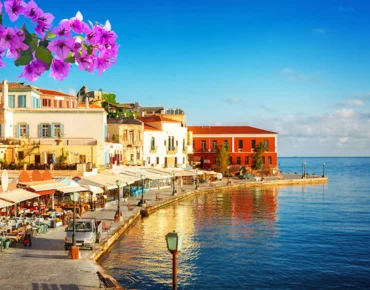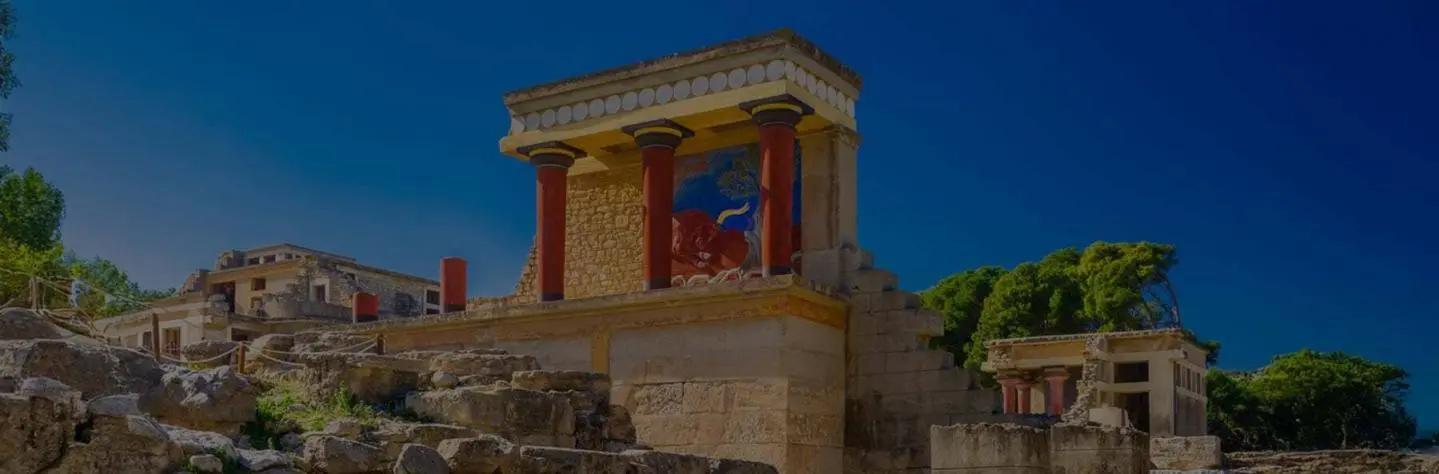
If you’re flying to Crete, the largest of the Greek islands, chances are a visit to the Minoan Palace of Knossos is high on your list. This sprawling archaeological site marks the very beginning of European civilization. It’s more than just a pile of old stones; it’s a doorway to a world of incredible myths, impressive engineering, and stunning art. As you plan your trip with Corendon Airlines, getting to know the history of the knossos ruins will make your visit so much richer than just a quick sightseeing stop.
Knossos is practically synonymous with the Minoan civilization, a Bronze Age culture that thrived on Crete long before the famous Golden Age of Athens. Today, it’s the most popular archaeological site on the island, attracting history buffs and curious travelers eager to walk where the legendary King Minos once walked.
Where is the Knossos Palace situated?
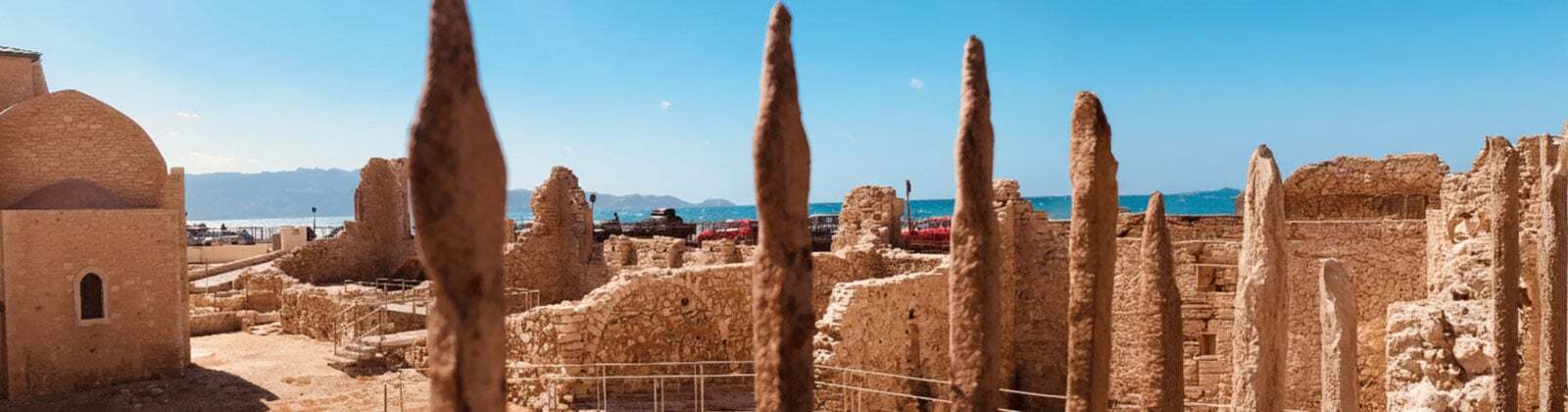
You’ll find the minoan palace of knossos in a prime spot in the central-northern part of Crete. It’s only about 5 kilometers (around 3 miles) south of Heraklion, the island’s capital and home to the main international airport. The palace was built on Kephala hill, with a beautiful view of the Kairatos River valley. This wasn’t a random choice; the hill offered natural protection, and its closeness to the sea – specifically the ancient harbor of Katsambas – allowed the Minoans to dominate sea trade in the Mediterranean.
Getting to the crete ruins knossos is easy; just hop on a short bus or grab a taxi from downtown Heraklion. It’s a perfect day trip if you’re staying in the city or at one of the nearby beach resorts. The surrounding landscape, filled with olive groves and vineyards, is just as captivating now as it probably was four thousand years ago.
What is the historical context of the region?
To really understand the knossos ruins, you need to know about Crete’s unique position in the ancient world. Lying at the intersection of Europe, Asia, and Africa, Crete acted as a bridge for culture and commerce. The region’s fertile land and strategic location at sea allowed for the rise of Europe’s first literate, urban civilization.
The first settlers arrived on Kephala hill around 7000 BC during the Neolithic period. But it was during the Bronze Age (roughly 2700 to 1100 BC) that Minoan culture truly blossomed. Unlike other civilizations at the time, like those in Egypt or Mesopotamia, the Minoans seemed to focus more on trade, art, and naval power than on conquering other lands. This “Thalassocracy” – rule of the sea – is key to understanding the region’s history. It brought huge wealth and sophisticated cultural influences back to the palace centers of Crete.
What is the history of the Knossos Palace?
The history of the minoan palace of knossos is a long and complex story of building, destruction, and rebuilding. It’s usually divided into the “Old Palace” period and the “New Palace” period.
Minoan Civilization and Culture
The Minoans were a seriously advanced bunch. They developed complex writing systems, known as Linear A (which we still haven’t deciphered) and later Linear B. Their culture was deeply connected to nature, as you can see in their art. Many historians believe that their society gave women a high status, especially in religious roles. When you look at palace of knossos facts, you’ll often see mentions of their incredible plumbing systems, including terracotta pipes for water and drainage, which were incredibly advanced for their time.
Mythology: King Minos and the Labyrinth
History and myth are tightly intertwined at Knossos. According to Greek mythology, the palace was home to King Minos. He tasked the master craftsman Daedalus with building a labyrinth to contain the Minotaur – a terrifying creature with the body of a man and the head of a bull. This myth became famous through the story of Theseus, the Athenian hero who entered the labyrinth to kill the beast, guided by Ariadne’s thread. The palace’s complex, multi-story layout probably inspired the legend of the Labyrinth in the minds of later Greeks who saw the ruins.
How the Palace was Built
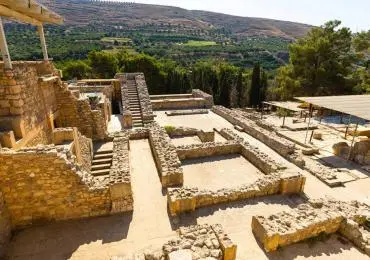
The first palace was built around 1900 BC but was destroyed by an earthquake around 1700 BC. The Minoans then built an even more impressive structure on its ruins – the New Palace. This version included:
- Over 1,300 rooms connected by corridors of varying widths.
- Grand staircases and light wells to brighten up the interior rooms.
- Large storage areas for oil, wine, and grain.
- A central courtyard that was the center of social and religious life.
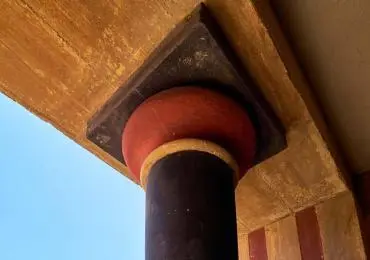
They used local limestone and gypsum for construction, with timber beams to help it withstand the region’s frequent earthquakes.
Decline and Downfall
The decline of Knossos is still a topic of debate. Around 1600 BC, the massive volcanic eruption on Thera (modern-day Santorini) caused tsunamis and ash clouds that greatly affected life on Crete. However, the palace survived and continued to be used. Its final downfall happened around 1450 BC, possibly due to a mix of internal social unrest and an invasion by the Mycenaean Greeks from the mainland. By 1375 BC, the palace was finally abandoned as a major administrative center, though people continued to live there on a smaller scale for centuries.

The Architecture of the Palace
The architecture of the minoan palace of knossos is one of its most remarkable features. Unlike the rigid, symmetrical temples of later Greece, Knossos feels more organic and maze-like. This “maze” was actually a very practical center for administration, religion, and economics.
Labyrinth-like Design
The palace covers about 20,000 square meters. Its layout features multiple levels, sloping floors, and a confusing network of rooms. This design was used to manage the palace’s various functions – from the royal living areas to the workshops of artisans and the huge storage areas (Pithoi) that held the island’s wealth. The use of “light wells” – open vertical shafts – made sure that even the lowest levels had natural light and ventilation, a true feat of ancient environmental engineering.
The Vibrant Frescoes
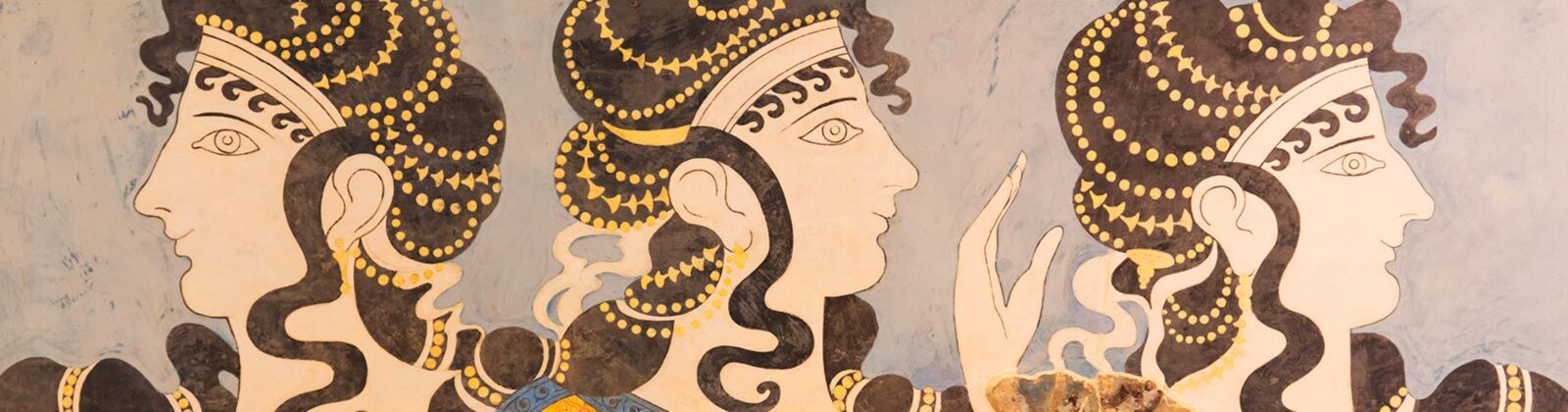
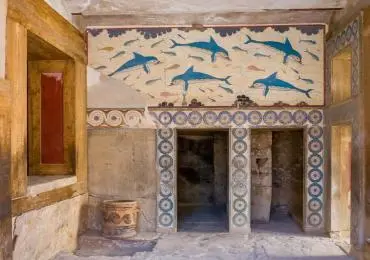
The walls of Knossos were once covered in vibrant frescoes that give us a glimpse into the Minoan spirit. Many of these have been reconstructed by Sir Arthur Evans, the archaeologist who excavated the site in the early 20th century. Some notable examples include:
- The Bull-Leaping Fresco: Showing an athletic event where young people jumped over charging bulls.
- The Prince of the Lilies: A striking figure thought to be a priest-king.
- The Dolphin Fresco: Found in the Queen’s Megaron, highlighting the Minoans’ strong connection to the sea.
- The Ladies in Blue: Depicting the elaborate hairstyles and fashions of Minoan noblewomen.
While Evans’ reconstructions are sometimes criticized for taking artistic liberties, they help visitors imagine the colorful splendor of the Bronze Age.
Palace of Knossos Facts: At a Glance
To help you get ready for your visit, here are some essential palace of knossos facts summarized in the table below:
| Feature | Details |
| Estimated Peak Population | Up to 100,000 people in the palace and the surrounding city. |
| Discovery | Minos Kalokairinos first discovered the site in 1878; Sir Arthur Evans began major excavations in 1900. |
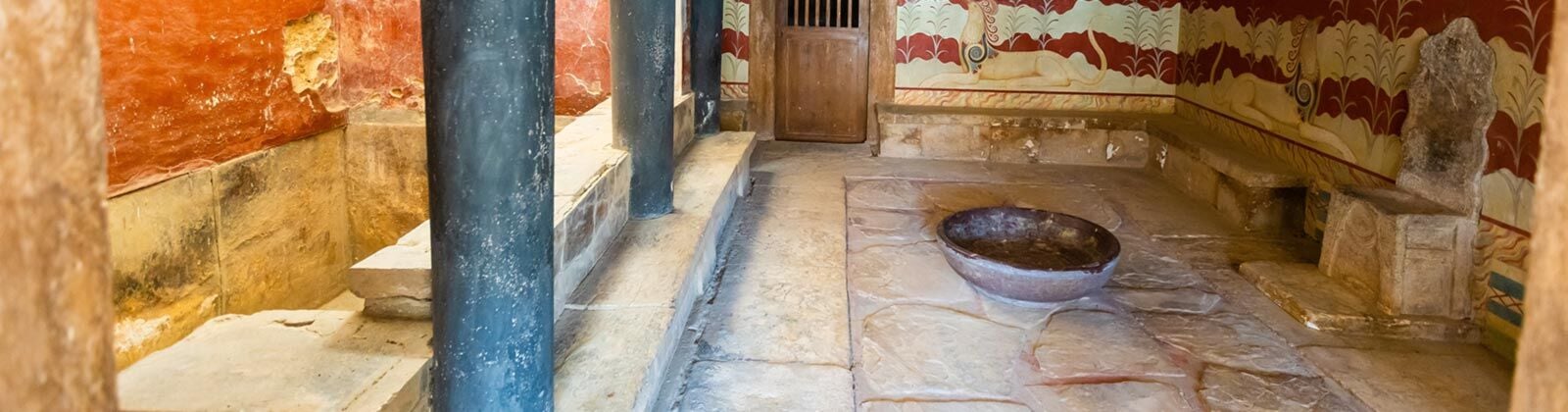
| Key Attraction | The Throne Room, featuring the oldest throne in Europe. |
| Modern Significance | A candidate for UNESCO World Heritage status. |
| Hydraulics | Features some of the world’s first flushing toilets. |
Things to do in Knossos and Surrounding Areas
Visiting the ruins is definitely the highlight, but there are also several other things to do in knossos and nearby to complete your cultural experience:
- Explore the Heraklion Archaeological Museum: This is a must-see companion to the palace. Most of the original frescoes, jewelry, and the famous “Snake Goddess” figurines are kept here, not at the site itself.
- Visit the Wine Region of Archanes: Just a short drive from Knossos, the village of Archanes offers great wine tasting and another smaller Minoan villa to explore.
- Walk the Venetian Walls of Heraklion: After exploring the Bronze Age, check out the island’s medieval history by walking along the massive defensive walls built by the Venetians.
- Dine in a Traditional Taverna: Near the Knossos entrance, you’ll find local restaurants serving Cretan specialties like dakos (rusks with tomato and feta) and kalitsounia (cheese pies).
Why is the palace worth visiting?
You might be wondering if ancient ruins are really worth a day of your vacation. The answer is absolutely yes! The minoan palace of knossos is special because it’s one of the few ancient sites where you can see “reconstructed” architecture. While most ruins are just flat foundations, Sir Arthur Evans rebuilt parts of the palace in concrete, allowing you to walk through rooms, under porticos, and up staircases. This gives you a sense of the scale and atmosphere that’s rare in archaeology.
Plus, Knossos represents the “Cradle of Western Civilization.” Standing in the Throne Room, looking at the stone seat where a ruler sat 3,500 years ago, is a truly humbling experience. It challenges our ideas about the past, showing us that ancient people were incredibly sophisticated, artistic, and technologically advanced. If you’re flying with Corendon Airlines to discover the beauty of Crete, Knossos offers the island’s historical heart and soul.
Knossos – Where Myth Meets History
Whether you’re a history enthusiast, a mythology lover, or simply a traveler looking for a beautiful and educational experience, the knossos ruins won’t disappoint. The site is a testament to human ingenuity and a must-visit destination that truly captures the spirit of Crete. Try to get there early in the morning to avoid the heat and the crowds, and think about hiring a certified guide to help you uncover the many layers of stories hidden within these ancient stones.
Want to know more about Crete? Then take a look at our Crete travel guide right away!