Suitcase packed, boarding pass in hand and your mind already at the destination — the excitement of a long-awaited trip often starts before you even step onto the plane. But for many travelers, the excitement fades quickly once the aircraft takes off. A queasy stomach, dizziness or cold sweats can suddenly appear and turn the beginning of a journey into an uncomfortable experience.
However, even if motion sickness seems like a nightmare in the moment, it is usually harmless and can often be managed with a few simple tricks. And don’t worry — understanding why it happens isn’t rocket science. Let’s take a closer look at what actually goes on in your body when air sickness kicks in and what are the best motion sickness remedies you can use during your journey.
What causes air sickness?
Before diving into ways to prevent motion sickness, let’s quickly see why your stomach sometimes rebels on a trip. Surprisingly, the trouble usually isn’t in your stomach at all — it’s your brain trying to make sense of mixed signals. Your inner ear constantly tracks every bump, turn, or bit of turbulence, while your eyes might see something completely different. Once the plane starts moving, your inner ear sends alerts about the motion, but your eyes barely notice it — and that’s when your brain gets a little confused.
When that happens, it triggers the same kind of protective response it would if it suspected poison in the body, which explains the classic symptoms: nausea, dizziness, a queasy feeling in the stomach — sometimes even cold sweats. We know it sounds scary but don’t worry: it’s harmless and can usually be tamed with a few simple tricks. Now let’s take a look at some easy ways to treat and prevent motion sickness.
Ways to prevent motion sickness on the plane
Now that we understand why motion sickness happens, let’s look at a few best motion sickness prevention methods while travelling.
Before the flight
Eat light before traveling: Heavy, greasy meals can make your stomach more sensitive during a flight. Instead, try something light and easy to digest before takeoff. Small snacks like fruit, crackers, or yogurt are usually a safer choice.
Get enough rest: A tired body tends to react more strongly to movement. Getting a good night’s sleep before your trip can help your body deal with turbulence and motion more comfortably.
Stay hydrated: Drinking enough water before and during your trip can help keep your body balanced. Small sips throughout the journey are usually better than large amounts at once.
During the flight
Choose your seat carefully: If possible, pick a seat near the wings of the plane. This area usually feels more stable because it experiences less movement than the front or the back of the cabin. For a complete guide on how to choose the seat that works best for you, check our article on the best seats on the plane.
Look outside when you can: Giving your eyes a clear reference point — like the horizon — can help your brain process motion more easily. Looking down at a phone or book for long periods can make the symptoms worse.
Move a little: If it’s safe to do so, stand up occasionally or stretch your legs. Small movements can help your body adjust and keep your circulation going.
Get some fresh air: Cool air can sometimes help reduce nausea. Using the air vent above your seat or taking slow, steady breaths may help calm your stomach.
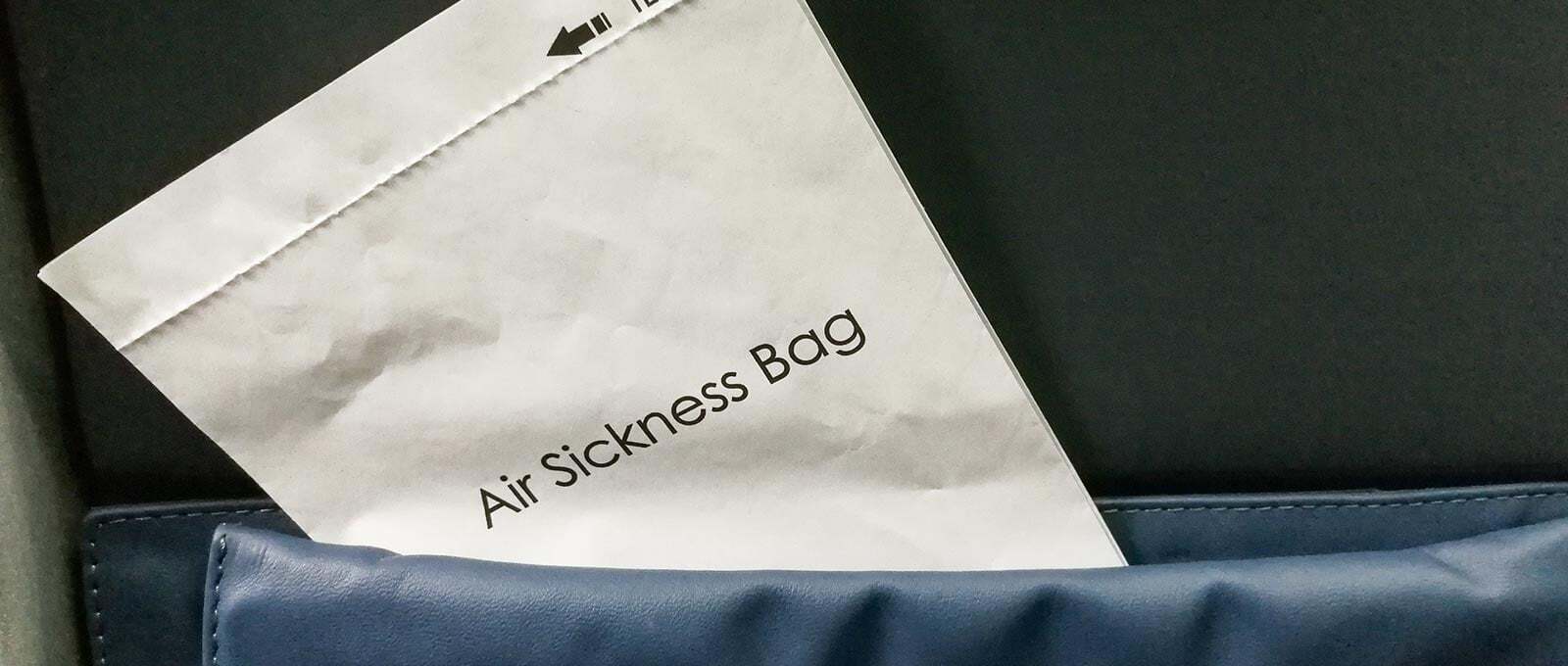
Things that help with motion sickness
These small habits and simple tricks can already make a big difference, but in some cases a few extra remedies can provide additional relief during the journey.
Anti-nausea gum or lozenges: Special chewing gums or lozenges designed for motion sickness can help settle the stomach. Some contain ingredients like ginger or anti-nausea medication.
Acupressure wristbands: Some travelers find relief with acupressure bands that apply gentle pressure to a specific point on the wrist. While results vary, many people say they help reduce nausea.
Medication: If motion sickness is a regular problem, medication might be an option. Many anti-nausea medicines are available over the counter, but it’s always a good idea to ask a doctor or pharmacist before using them.
Natural travel sickness remedies
If you’d rather skip medication, there are a few natural remedies that might help calm your stomach during a trip.
Ginger for motion sickness
Ginger is one of the easiest natural remedies for motion sickness. Many travelers swear by it to settle an uneasy stomach. Have a cup of ginger tea or a few ginger candies about 30–60 minutes before your trip. Capsules or a few slices of fresh ginger are also effective and easy to bring along.
Peppermint for motion sickness
Peppermint is another simple and popular remedy for motion sickness. Sip peppermint tea or suck on a few peppermint candies before and during your trip to help soothe your stomach and reduce nausea. The cool, refreshing flavor can make it easier to stay calm and comfortable while traveling.
Lemon for motion sickness
The scent and taste of lemon can sometimes help settle a queasy stomach. Squeeze a little lemon into water, chew on a lemon slice, or simply inhale the fresh aroma for a natural pick-me-up when you feel queasy.
Keeping Air Sickness in Check
Motion sickness can turn the first moments of a trip into a bit of a challenge, but the good news is that it’s usually harmless — and there are plenty of ways to keep it under control. From simple habits before and during travel to natural remedies like ginger, peppermint, lemon, or acupressure, there are lots of tools to help calm a queasy stomach.
Everyone reacts differently, so it might take a little experimenting to find what works best. But with a few small adjustments, even the bumpiest journey can be much more comfortable.