
You’ve been looking forward to this trip for weeks: no alarm clocks, no to-do lists, just new places and real downtime. But then you step off a long-haul flight and instead of feeling ready to explore, you feel like a zombie. Your body thinks it’s the middle of the night, your eyes are heavy in the afternoon, and your sleep schedule is a complete mess. That’s jetlag – and it has a way of stealing the excitement from those first few days if you let it.
The good news? You don’t have to just suffer through it. In this article, we’ll break down what’s actually happening inside your body when you cross multiple time zones, and show you the best way to overcome jetlag – so that you can bounce back quickly and actually enjoy your vacation from the start.
What causes Jetlag?
Jetlag happens because your body has its own internal clock — and that clock doesn’t care about your boarding pass. It runs on the light-dark cycle of wherever you’ve been, not wherever you’ve just landed. So when you hop across time zones, your body is still living in the old one. It wants breakfast at 3 a.m. local time and feels wide awake when everyone else is going to bed.
The main culprit behind this mess is a hormone called melatonin. Your body produces it when it gets dark, as a natural signal to wind down and get ready for sleep. But after a long flight, that signal gets scrambled. Your body might pump out melatonin in the middle of the afternoon or hold back when you actually need it at night. The result? You’re exhausted but can’t sleep, or you crash at 6 p.m. and wake up at 2 a.m. feeling strangely alert.
In short, jetlag is just a timing problem. Your internal schedule and the local schedule are out of sync, and until your body catches up, you’re stuck in that weird limbo between tired and wired.
What are the symptoms of Jetlag?
But what does jetlag actually feel like? It’s more than just being tired – your body is literally living in a different time zone than the world around you. And it lets you know in some pretty unmistakable ways. Here’s what you can expect:
- Sleep disruption – trouble falling asleep at night or waking up too early and not being able to get back to sleep
- Daytime fatigue – a heavy, dragging tiredness that makes it hard to stay awake and focused
- Brain fog – difficulty concentrating, forgetfulness, feeling mentally slow
- Irritability – small things get on your nerves more than usual
- Digestive issues – your appetite is off, you might feel bloated or constipated, or get hungry at odd hours
- Headaches – often from poor sleep, dehydration, or the general stress of travel
- Mood swings – some people feel a bit down, unmotivated, or just not like themselves
How long does Jetlag last?
Jet lag doesn’t follow a strict schedule, but there’s a handy rule of thumb: expect about one day of recovery for every time zone crossed. So if you’ve flown from New York to London (five zones), give yourself roughly five days to feel fully adjusted. That said, the direction matters a lot — flying east is usually tougher than flying west, because it’s harder for your body to lose time than to gain it. Individual factors play a role too: some people bounce back in half the time, while others need a bit longer, especially older travelers or those who already run on an irregular sleep schedule.
How to overcome Jetlag
Unfortunately, there’s no way to avoid it entirely. But with the right strategies, you can make life a whole lot easier. Below, we’ll look at what really helps to get over jet lag faster.
Adjust your sleep schedule beforehand
To make adjusting to a new time zone as smooth as possible, one of the most underrated things you can do is start shifting your sleep schedule before you even leave. If you’re flying east, try going to bed a little earlier a few days before your trip. Heading west? Do the opposite and stay up a bit later. That way, your body’s already partway adapted before you’ve even set foot on the plane.
Plan your sleep on the plane
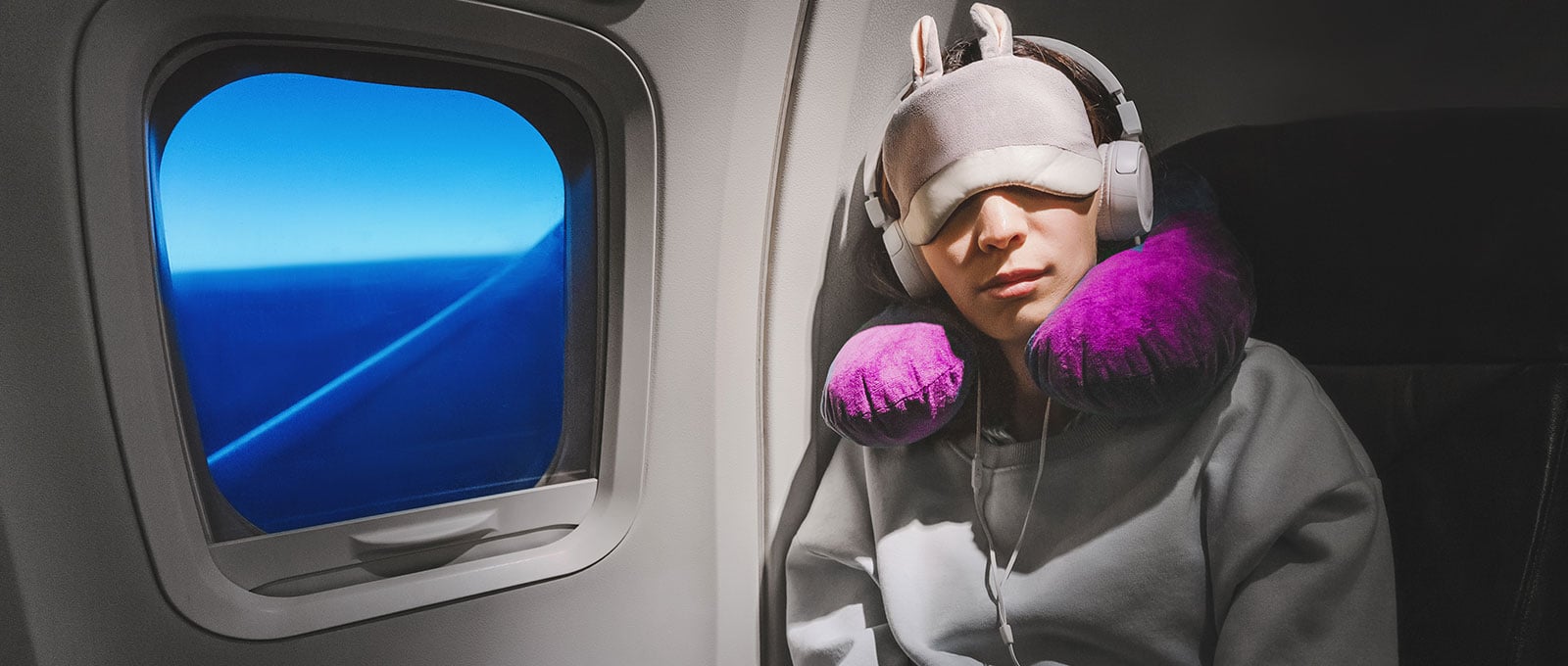
To avoid jet lag, it’s not just important to adjust to the new time after you arrive — you should also take a few steps while you’re still on the plane. If it’s nighttime at your destination, it can help to catch some sleep during the flight. If it’s daytime there, try to stay awake and keep yourself occupied. That way, your body can start getting used to the new rhythm while you’re still in the air, which often makes the transition after landing a lot easier.
Drink enough water
Grabbing a big cup of coffee right before your flight? It might sound tempting, but it can actually work against your body’s ability to adjust. Especially on long flights, it’s worth going easy on the caffeine. The same goes for alcohol. Instead, make sure you’re drinking plenty of water to support your body and help counteract the effects of jet lag. The best approach is to bring a reusable water bottle and fill it up after security, so you can stay hydrated throughout the flight.
Get moving after you arrive
Sure, after a long, exhausting flight, all you want to do is collapse onto the hotel bed. But a little movement might be exactly what your body needs. A short walk in the fresh air helps get your circulation going and makes it easier to adjust to the new day-night rhythm. It gives your body that little nudge it needs to adapt to the new time zone.